
Innervisions
by Stevie Wonder
Released: August 03, 1973
Progressive soul, funk, soul, rock, jazz
Shop Stevie Wonder
Amazon affiliate linksWhy This Album Matters
This album matters because its strongest editorial story is: Breakthrough.
The Album
"Innervisions" is Stevie Wonder's sixteenth studio album, released on August 3, 1973, by Tamla, a Motown Records subsidiary. It is a landmark release in Wonder's career, marking his transition from the "Little Stevie Wonder" known for romantic ballads to a more mature, socially conscious artist. The album features extensive use of the T.O.N.T.O. (The Original New Timbral Orchestra) synthesizer system, developed by Malcolm Cecil and Robert Margouleff, showcasing Wonder's innovative approach to music.
Inside the Recording
At the 16th Grammy Awards, Innervisions won Album of the Year and Best Engineered Non-Classical Recording, with the track "Living for the City" winning Best R&B Song.
Essential Tracks
Visions
"Innervisions" is Stevie Wonder's sixteenth studio album, released on August 3, 1973, by Tamla, a Motown Records subsidiary.
Living For The City
At the 16th Grammy Awards, Innervisions won Album of the Year and Best Engineered Non-Classical Recording, with the track "Living for the City" winning Best R&B Song.
Explore the Album
Stevie Wonder - Innervisions
Open in Albums Gallery
Reception
The album achieved significant commercial success, peaking at number four on the Billboard Top LPs & Tapes chart and reaching number one on the Billboard Soul LPs chart. It finished at number four on the 1974 Top Pop Albums chart. At the 16th Grammy Awards, Innervisions won Album of the Year and Best Engineered Non-Classical Recording, with the track "Living for the City" winning Best R&B Song.
Legacy
Innervisions is widely regarded as one of Stevie Wonder's greatest works and a major influence on the sound of soul and black music. It was ranked number 34 on Rolling Stone's list of "The 500 Greatest Albums of All Time" in 2020 and was inducted into the Grammy Hall of Fame in 1999.
The Complete Album Story
"Innervisions" is Stevie Wonder's sixteenth studio album, released on August 3, 1973, by Tamla, a Motown Records subsidiary. It is a landmark release in Wonder's career, marking his transition from the "Little Stevie Wonder" known for romantic ballads to a more mature, socially conscious artist. The album features extensive use of the T.O.N.T.O. (The Original New Timbral Orchestra) synthesizer system, developed by Malcolm Cecil and Robert Margouleff, showcasing Wonder's innovative approach to music.
The album achieved significant commercial success, peaking at number four on the Billboard Top LPs & Tapes chart and reaching number one on the Billboard Soul LPs chart. It finished at number four on the 1974 Top Pop Albums chart. At the 16th Grammy Awards, Innervisions won Album of the Year and Best Engineered Non-Classical Recording, with the track "Living for the City" winning Best R&B Song.
Innervisions is widely regarded as one of Stevie Wonder's greatest works and a major influence on the sound of soul and black music. It was ranked number 34 on Rolling Stone's list of "The 500 Greatest Albums of All Time" in 2020 and was inducted into the Grammy Hall of Fame in 1999.
More Progressive soul Albums
 Funkadelic - Maggot Brain
 Stevie Wonder - Music of My Mind
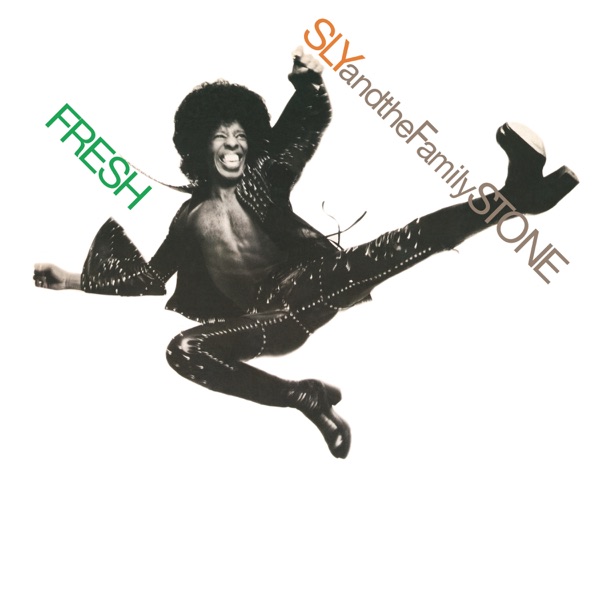 Sly And The Family Stone - Fresh
 Frank Ocean - Channel Orange
 Earth, Wind & Fire - Head to the Sky
 Earth, Wind & Fire - That's the Way of the World
 The Jackson 5 - Dancing Machine
 The Temptations - Cloud Nine
 Stevie Wonder - Songs in the Key of Life
 War - All Day Music
 Stevie Wonder - A Time to Love

Join the Conversation
Share your thoughts about this album.
Please log in to add a comment.
No comments yet. Be the first to comment.