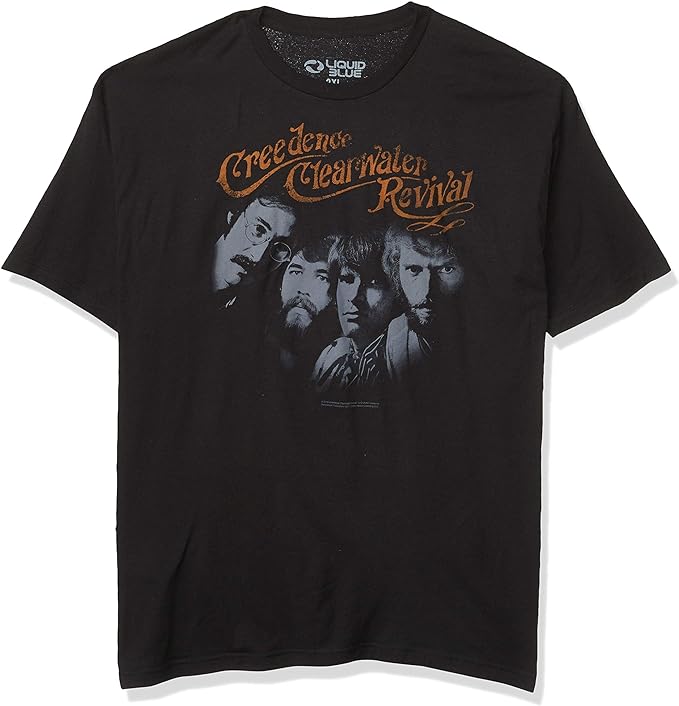
Creedence Clearwater Revival
Overview
Creedence Clearwater Revival, often abbreviated as CCR, was an American rock band that became immensely popular in the late 1960s and early 1970s. Known for their distinctive roots rock sound and politically and socially conscious lyrics, the band's music has continued to capture new generations of fans. CCR's music blends rock and roll with country, swamp rock, and blues influences, creating a sound that is both timeless and immediately recognizable. The band released several hit singles and albums during their active years, and despite their relatively short time together, they have left an indelible mark on the music industry, influencing countless artists across multiple genres.
CCR was led by John Fogerty, who was the primary songwriter, guitarist, and vocalist for the band. His brother Tom Fogerty played rhythm guitar, while Stu Cook and Doug Clifford completed the group on bass and drums, respectively. One of the defining features of CCR's music was John Fogerty's gritty and powerful voice, which, combined with the band's tight musicianship, produced a string of iconic songs that remain popular decades after their release. Although the band faced challenges, including internal tensions and disputes with their record label, their legacy as one of the great American rock bands remains intact.
The band's popularity can be attributed to their ability to craft songs that were relevant to the times, speaking to the social and cultural issues of the era. Songs like 'Fortunate Son' and 'Who'll Stop the Rain' resonated with audiences amid the Vietnam War, civil rights movement, and other societal upheavals. CCR's music often mirrored the prevailing sentiments of disillusionment and hope, serving as both a commentary on and soundtrack to the changing times.
Despite their breakup in the early 1970s, the music of Creedence Clearwater Revival has stood the test of time. Their songs have been featured in numerous films, television shows, and commercials, ensuring that their music continues to reach new audiences. Their work is celebrated for its simplicity, honesty, and powerful messages, which have cemented CCR as one of the most significant and influential rock bands of their era.
Formation and Early Years
The roots of Creedence Clearwater Revival began in the late 1950s when John Fogerty, Tom Fogerty, Stu Cook, and Doug Clifford first came together as a band in El Cerrito, California. Initially, they performed under the name The Blue Velvets, playing instrumental rock and roll and occasionally backing up John and Tom's elder brother, Jim, who was pursuing a solo career at the time. As they honed their sound, the band transitioned through various names and musical influences, including a brief period as The Golliwogs.
During their time as The Golliwogs, the band struggled to achieve widespread recognition. The name change to Creedence Clearwater Revival marked a significant turning point. It was inspired by a fusion of Tom Fogerty's friend Creedence Newball's name, a commercial for Olympia beer promising 'clear water,' and the band's upsurge from their past struggles, signifying a 'revival.' This new identity aligned with a desire to create music that was grounded, authentic, and reflective of their American roots.
The transition from a local band to a recording group was facilitated by their signing with the Fantasy Records label. Under the management of Saul Zaentz, the band began recording and performing music that would eventually capture national attention. The early years were marked by a rigorous schedule of rehearsals, recordings, and live performances, which helped the group refine their distinct sound. John Fogerty emerged as the driving creative force behind the band, taking charge of writing most of the songs and developing their signature style.
Soon after their debut album, CCR quickly gained traction in the American music scene. Their self-titled debut album, released in 1968, featured the hit single 'Suzie Q,' which dropped in its long version managed to climb the charts, setting the stage for the band's future successes. The early years set the foundation for their rapid ascent to stardom, marked by a combination of hard work, distinctive sound, and a unique approach to rock music that resonated with the broader public.
Career Highlights
Creedence Clearwater Revival enjoyed a brief but highly successful career from 1968 to 1972, during which they released a series of albums that achieved critical and commercial success. The band's impact was felt not only in the United States but internationally, as they became renowned for both their studio work and live performances. CCR's music reached audiences worldwide, and they were frequently at the top of the charts during their peak years.
One of CCR's most notable achievements was their remarkable run of hit singles and albums. They produced a string of classic singles, including 'Proud Mary,' 'Bad Moon Rising,' 'Green River,' 'Down on the Corner,' 'Fortunate Son,' and 'Have You Ever Seen the Rain?' among others. These songs remain staples of rock radio and are regularly covered by other artists, underscoring their lasting appeal. The lyrics often addressed themes such as working-class struggles, war, and social justice, resonating deeply with listeners at the time.
In 1969 alone, CCR released three albums — 'Bayou Country,' 'Green River,' and 'Willy and the Poor Boys' — all of which contributed to a year of unparalleled productivity and creativity. Each album contained hit singles, showcasing the band's ability to produce a consistent stream of popular and thought-provoking music. Their prolific output and the undeniable quality of their work made them one of the most dominant forces on the rock charts at the time.
Over the course of their career, CCR was nominated for several major music awards, including the prestigious Grammy Awards. Although they never won a Grammy during their active years, the band's contributions to rock music have been acknowledged and celebrated through various honors in later years. Despite internal conflicts and a relatively brief career, Creedence Clearwater Revival's impact on rock music remains significant, with their work continuing to captivate new generations of fans.
Musical Style
Creedence Clearwater Revival's musical style is often characterized as a blend of rock and roll, swamp rock, country, and blues. Their sound is instantly recognizable and distinct, distinguished by its simplicity, rawness, and emotional directness. At a time when many rock bands were experimenting with complex arrangements and psychedelic influences, CCR stood out by embracing a down-to-earth and straightforward approach to their music.
The band's sound was largely defined by John Fogerty's powerful, raspy voice, which could convey a wide range of emotions, from the fiery energy of protest songs to the introspective longing in their ballads. His songwriting was noted for its vivid imagery and storytelling, often drawing from American pop culture and historical themes. John Fogerty's work explored socio-political topics, encapsulating the zeitgeist of the 1960s and early 1970s through poignant and timeless lyrics.
Instrumentally, CCR favored a stripped-back approach that emphasized tight, rhythmic guitar riffs, melodic bass lines, and solid, driving drumming. The interplay between John's lead guitar and Tom Fogerty's rhythm guitar was a significant aspect of their sound, providing a rich, full-bodied tonal palette that supported the narrative of their songs. Their music also incorporated elements of Southern rock, despite the band's West Coast origins, borrowing from the rootsy, blues-infused traditions of the American South.
CCR's style not only set them apart from their contemporaries but also paved the way for future bands that drew inspiration from roots and Americana music. Their willingness to defy the more elaborate trends of their time, opting instead for a raw and relatable sound, endeared them to audiences worldwide. The combination of honest, universal lyrics and lively melodies has made CCR's music enduring, timeless, and an essential part of rock and roll history.
Most Important Albums
During their active years, Creedence Clearwater Revival released a series of albums that each contributed to their reputation as one of America's greatest rock bands. Each album showcased the band's evolving sound, demonstrating their ability to craft hit songs while exploring a variety of themes and styles.
'Bayou Country,' released in 1969, was a breakthrough success for the band. It was the album that solidified CCR's place in the American rock scene, featuring the hit single 'Proud Mary,' which became one of their most celebrated tracks. The album's swamp rock influences and soulful melodies captured listeners' imaginations, earning critical acclaim and commercial success. It set the tone for the band's prolific output that year.
Later that same year, 'Green River' continued CCR's ascendance to rock stardom. The album delivered two major hits, the title track 'Green River' and 'Bad Moon Rising,' both of which remain iconic songs in the rock genre. This album further demonstrated the band's knack for blending catchy melodies with insightful lyrics, cementing their status as masters of rock music.
'Cosmo's Factory,' released in 1970, is often regarded as the pinnacle of CCR's creative output. It features an array of some of the band's biggest hits, including 'Travelin' Band,' 'Who'll Stop the Rain,' 'Lookin' Out My Back Door,' and 'Up Around the Bend.' This album received widespread acclaim for its cohesion, diverse influences, and the maturity of Fogerty's songwriting. It represented the culmination of CCR's musical journey, showcasing their ability to produce enduring hits while experimenting with new sounds.
Although the band released other albums, such as 'Willy and the Poor Boys' and 'Pendulum,' during their career, the aforementioned works remain the most definitive of their discography. These albums contain the essence of CCR's sound and have persisted as beloved classics in the rock music canon. They represent the high watermark of CCR's artistry and continue to be celebrated for their craftsmanship, influence, and timeless appeal.
Legacy and Influence
Creedence Clearwater Revival's legacy is profound and pervasive within the rock music world and beyond. Despite their relatively short career, the band's influence can be felt in the works of numerous artists who followed in their footsteps. CCR's music has been embraced by punk, alternative rock, blues, and folk artists alike, with many citing the band as a crucial influence in developing their own musical identity.
The band's straightforward, roots-oriented approach helped to pioneer a distinct path for rock music, one that integrated traditional American musical styles with modern rock and roll. Their ability to distill complex ideas into straightforward, approachable songs inspired many who came after them to follow a similar path. Bands and songwriters have looked to CCR as an example of how to address political and social issues in music compellingly and effectively.
In addition to their influence on generations of musicians, Creedence Clearwater Revival's music continues to enjoy widespread popularity. Their songs are still regularly played on classic rock radio stations, streamed online, and featured in films, television shows, and commercials. This enduring relevance is a testament to the band's ability to craft music that transcends its original era, connecting with new audiences who understand and appreciate its universal themes and energetic sound.
As a band that spoke to the heart of the American experience, CCR left an indelible mark on the cultural landscape. Their songs captured the spirit of the times while also addressing timeless human experiences, from the struggles of working-class life to the pursuit of freedom and authenticity. This dual nature has ensured CCR's place in the annals of rock history, celebrating them as not only a quintessential American band but also as an enduring and universal voice in music.
Albums by Creedence Clearwater Revival

Live at Woodstock
August 02, 2019
Swamp rock

Chronicle: The 20 Greatest Hits
January 03, 1976
Americana, swamp rock

Live in Europe
October 16, 1973
Swamp rock

Creedence Gold
November 08, 1972
Swamp rock, roots rock, blues rock, country rock, Southern rock
🛍 Shop Music

Mardi Gras (album)
April 11, 1972
Country rock

Pendulum
December 09, 1970
Swamp rock

Cosmo's Factory
July 08, 1970
Rock, Swamp rock

Willy and the Poor Boys
October 29, 1969
Swamp rock, blues rock, Southern rock, Americana

Green River
August 07, 1969
Swamp rock, blues rock, rock and roll, Americana

Bayou Country
January 15, 1969
Swamp rock

Creedence Clearwater Revival (album)
May 28, 1968
Swamp rock, blues rock, rock and roll
Musicians / Members connected to Creedence Clearwater Revival


FAQ about Creedence Clearwater Revival
What genre is Creedence Clearwater Revival?
Creedence Clearwater Revival is commonly associated with Rock, Southern rock, Country rock, Swamp rock.
Where is Creedence Clearwater Revival from?
Creedence Clearwater Revival is from El Cerrito, California, United States.
How many albums by Creedence Clearwater Revival are listed on musicOnOff?
musicOnOff currently lists 11 albums by Creedence Clearwater Revival.
