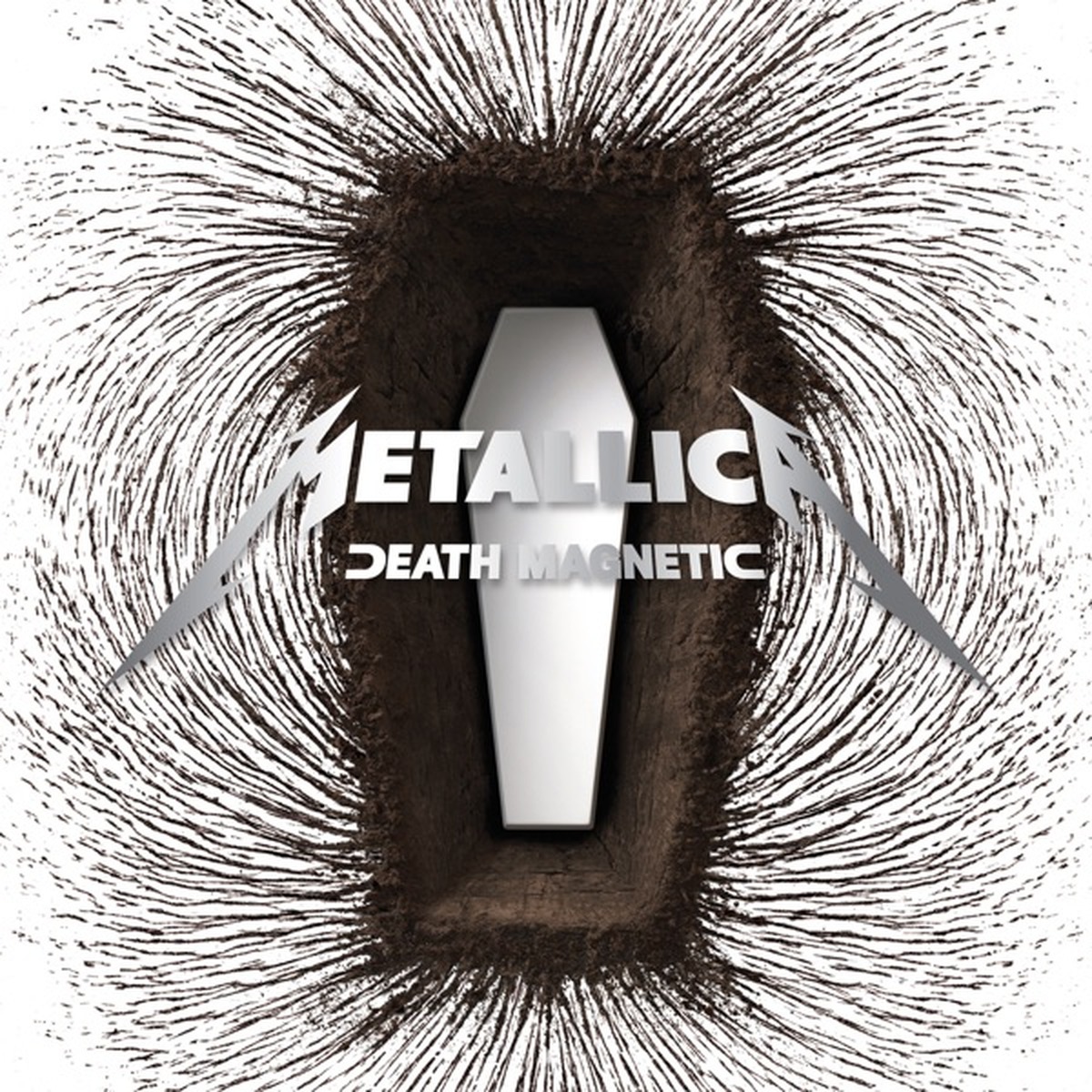
Death Magnetic
by Metallica
Released: September 12, 2008
Thrash metal, heavy metal
Shop Metallica
Amazon affiliate linksWhy This Album Matters
A published 2008 James Hetfield interview directly states that the lyrics began as a tribute to Staley and other rock martyrs. The Los Angeles Times independently reported Ulrich's explanation of the broader title concept and specifically identified Cliff Burton as another example.
The Album
"Death Magnetic" is the ninth studio album by American heavy metal band Metallica, released on September 12, 2008, through Warner Bros. It also represents a return to Metallica's thrash metal roots, contrasting sharply with their earlier, more experimental album, St. Anger (2003). The album is noted for its complex compositions, standard guitar tunings, and long guitar solos by Kirk Hammett and James Hetfield.
Inside the Recording
Produced by Rick Rubin, it marked a departure from the band's previous producer, Bob Rock, and was the first album featuring bassist Robert Trujillo. Four unreleased tracks from the recording sessions were later released as the Beyond Magnetic EP in December 2011.
Interesting Facts
Kirk Hammett influenced the title of Death Magnetic…
Kirk Hammett influenced the title of Death Magnetic by bringing a photograph of the late Alice in Chains singer Layne Staley to the recording studio.
The image of Staley, who had died young…
The image of Staley, who had died young due to drug abuse, deeply affected James Hetfield, leading him to ponder the nature of death and its allure.
This introspection inspired Hetfield to write the song…
This introspection inspired Hetfield to write the song "Rebel of Babylon" and eventually contributed to the album's title.
Hetfield explained that Death Magnetic began as a…
Hetfield explained that Death Magnetic began as a tribute to fallen rock stars, like Staley, and evolved into a broader reflection on death.
He described the title as representing the magnetic…
He described the title as representing the magnetic pull of death—how some people are drawn to it while others fear it—and the often-avoided conversation about mortality.
Essential Tracks
Suicide & Redemption
It includes the band's first instrumental track since ...And Justice for All’s "To Live Is to Die," titled "Suicide & Redemption." Death Magnetic achieved significant commercial success, making Metallica the first band to have five consecutive number-one studio albums on the U.S. Billboard 200.
My Apocalypse
The album received six Grammy nominations, winning three, including Best Metal Performance for "My Apocalypse." Metallica supported the album with the World Magnetic Tour from October 2008 to November 2010.
Explore the Album
Metallica - Death Magnetic
Open in Albums Gallery
Reception
It includes the band's first instrumental track since ...And Justice for All’s "To Live Is to Die," titled "Suicide & Redemption." Death Magnetic achieved significant commercial success, making Metallica the first band to have five consecutive number-one studio albums on the U.S. Billboard 200. The album received six Grammy nominations, winning three, including Best Metal Performance for "My Apocalypse." Metallica supported the album with the World Magnetic Tour from October 2008 to November 2010. Critics praised the album as a return to form for the band, though its production was criticized for being overcompressed, a common issue in the loudness war.
The Complete Album Story
"Death Magnetic" is the ninth studio album by American heavy metal band Metallica, released on September 12, 2008, through Warner Bros. Records. Produced by Rick Rubin, it marked a departure from the band's previous producer, Bob Rock, and was the first album featuring bassist Robert Trujillo. It also represents a return to Metallica's thrash metal roots, contrasting sharply with their earlier, more experimental album, St. Anger (2003). The album is noted for its complex compositions, standard guitar tunings, and long guitar solos by Kirk Hammett and James Hetfield. It includes the band's first instrumental track since ...And Justice for All’s "To Live Is to Die," titled "Suicide & Redemption."
Death Magnetic achieved significant commercial success, making Metallica the first band to have five consecutive number-one studio albums on the U.S. Billboard 200. Critics praised the album as a return to form for the band, though its production was criticized for being overcompressed, a common issue in the loudness war. The album received six Grammy nominations, winning three, including Best Metal Performance for "My Apocalypse." Metallica supported the album with the World Magnetic Tour from October 2008 to November 2010. Four unreleased tracks from the recording sessions were later released as the Beyond Magnetic EP in December 2011.
Kirk Hammett influenced the title of Death Magnetic by bringing a photograph of the late Alice in Chains singer Layne Staley to the recording studio. The image of Staley, who had died young due to drug abuse, deeply affected James Hetfield, leading him to ponder the nature of death and its allure. This introspection inspired Hetfield to write the song "Rebel of Babylon" and eventually contributed to the album's title.
Hetfield explained that Death Magnetic began as a tribute to fallen rock stars, like Staley, and evolved into a broader reflection on death. He described the title as representing the magnetic pull of death—how some people are drawn to it while others fear it—and the often-avoided conversation about mortality. The title is referenced in the track "My Apocalypse."
Originally, another title under consideration was Songs of Suicide and Forgiveness. The final title, Death Magnetic, emerged from discussions with Turner Duckworth, the creative agency responsible for the album’s visual identity, reflecting the themes of death, fear, and the inevitability of mortality present in the album’s content.
More Thrash metal Albums
 Sepultura - Arise (Sepultura album)
 Body Count - Carnivore
 Metallica - The $5.98 E.P. – Garage Days Re-Revisited
 Sepultura - The Mediator Between Head and Hands..

Join the Conversation
Share your thoughts about this album.
Please log in to add a comment.
No comments yet. Be the first to comment.