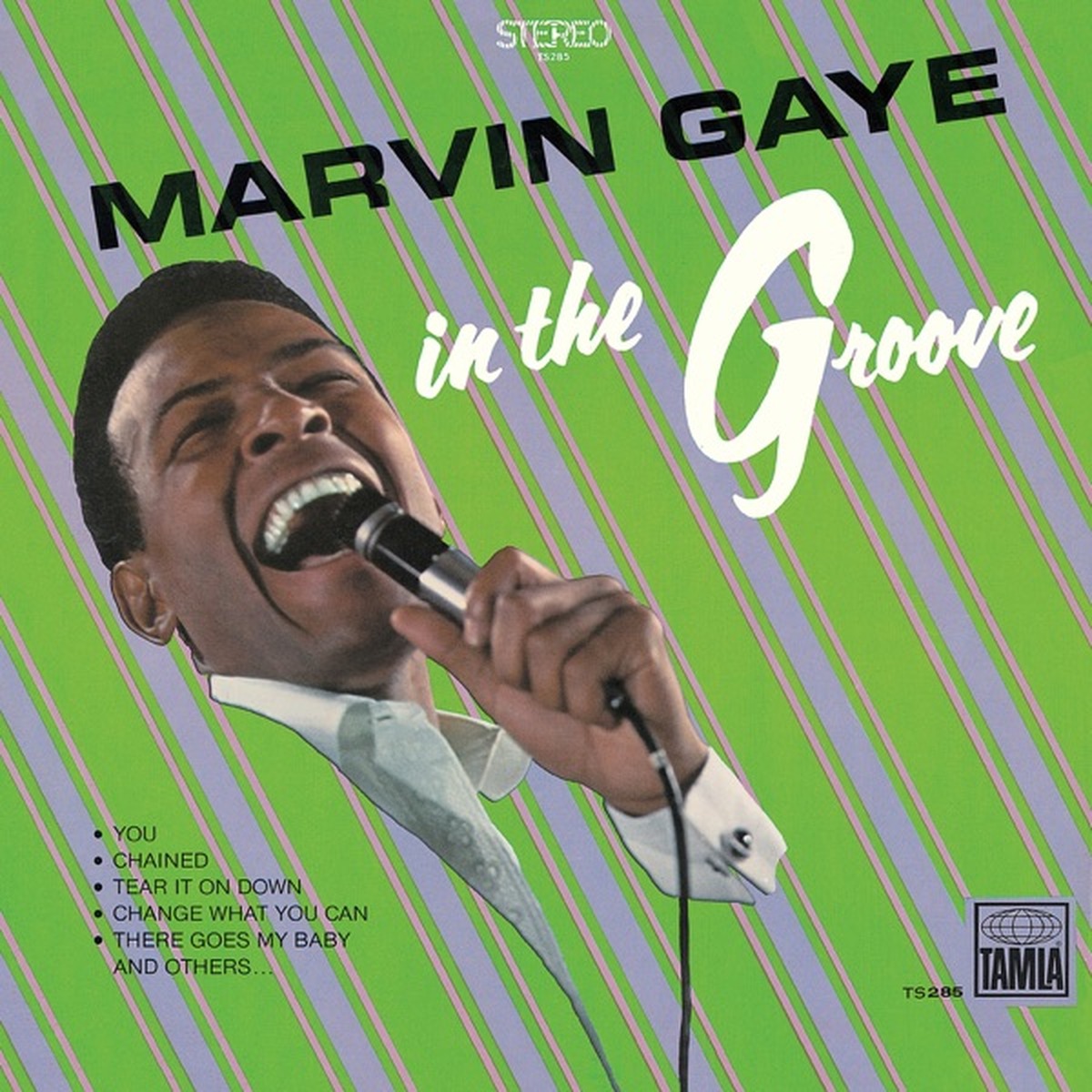
In the Groove
by Marvin Gaye
Released: August 26, 1968
Soul
Shop Marvin Gaye
Amazon affiliate linksWhy This Album Matters
The central hook—Motown rejected Gaye’s “Grapevine” as a single, DJs later played it from In the Groove, and Motown subsequently issued the single and retitled the album—is supported by first-hand evidence from Berry Gordy’s autobiography, quoted in Andrew Flory’s academic study: Gordy recalled that DJs played it so much from the album that Motown had to release it. Motown/UMe’s official Marvin Gaye release history independently confirms the repeated Quality Control rejections, the DJs’ album play, Gordy’s decision to release the single as airplay took hold, and the album’s retitling and redesign. M Music & Musicians independently corroborates the rejection, album placement, radio response and title change, while preserving Gaye’s first-hand recollection of the difficult high-register recording session. ([people.carleton.edu](https://people.carleton.edu/~aflory/MPG.pdf?utm_source=openai))
The Album
Songwriters Norman Whitfield and Frank Wilson crafted songs that reflected Gaye's tumultuous personal life. "In the Groove" is the eighth studio album by soul musician Marvin Gaye, released on August 26, 1968, through Tamla Records, a Motown subsidiary. Motown brought Gaye back to the studio at the beginning of 1967 to record a solo album.
Interesting Facts
Some speculate that Terrell's illness and subsequent death…
Some speculate that Terrell's illness and subsequent death influenced Gaye's shift from a Sam Cooke-style soul artist to a more gospel-influenced soul vocalist, akin to Otis Redding and James Brown.
Despite this, Whitfield recorded a version by Gladys…
Despite this, Whitfield recorded a version by Gladys Knight & the Pips, which became a major success.
Following the album's release, it was reissued and…
Following the album's release, it was reissued and retitled "I Heard It Through the Grapevine" due to the unexpected success of the single of the same name, which was included on the original album.
His marriage to Anna Gordy was unstable, and…
His marriage to Anna Gordy was unstable, and his dissatisfaction with live performances, coupled with growing tensions with Motown CEO Berry Gordy, added to his stress.
It was Gaye's first solo album in two…
It was Gaye's first solo album in two years, during which he had achieved notable success as a duet partner with artists like Kim Weston and Tammi Terrell.
Essential Tracks
You
During this period, he focused on successful duets with Kim Weston and Tammi Terrell, including hits like "It Takes Two" and "Ain't No Mountain High Enough." His solo single "Your Unchanging Love" had modest success, peaking at number 33 on the Billboard Hot 100.
I Heard It Through The Grapevine
Following the album's release, it was reissued and retitled "I Heard It Through the Grapevine" due to the unexpected success of the single of the same name, which was included on the original album.
Explore the Album
Marvin Gaye - In the Groove
Open in Albums Gallery
Reception
During this period, he focused on successful duets with Kim Weston and Tammi Terrell, including hits like "It Takes Two" and "Ain't No Mountain High Enough." His solo single "Your Unchanging Love" had modest success, peaking at number 33 on the Billboard Hot 100.
The Complete Album Story
"In the Groove" is the eighth studio album by soul musician Marvin Gaye, released on August 26, 1968, through Tamla Records, a Motown subsidiary. It was Gaye's first solo album in two years, during which he had achieved notable success as a duet partner with artists like Kim Weston and Tammi Terrell. Following the album's release, it was reissued and retitled "I Heard It Through the Grapevine" due to the unexpected success of the single of the same name, which was included on the original album.
By late 1967, Marvin Gaye had released just one solo single in 18 months. During this period, he focused on successful duets with Kim Weston and Tammi Terrell, including hits like "It Takes Two" and "Ain't No Mountain High Enough." His solo single "Your Unchanging Love" had modest success, peaking at number 33 on the Billboard Hot 100.
Motown brought Gaye back to the studio at the beginning of 1967 to record a solo album. Despite recording challenges, Gaye’s vocals were evolving during this time. Songwriters Norman Whitfield and Frank Wilson crafted songs that reflected Gaye's tumultuous personal life. His marriage to Anna Gordy was unstable, and his dissatisfaction with live performances, coupled with growing tensions with Motown CEO Berry Gordy, added to his stress.
In October 1967, while performing with Terrell, she collapsed due to exhaustion and was later diagnosed with a brain tumor, which deeply affected Gaye. Some speculate that Terrell's illness and subsequent death influenced Gaye's shift from a Sam Cooke-style soul artist to a more gospel-influenced soul vocalist, akin to Otis Redding and James Brown. During the recording of what would become Gaye's biggest hit, "I Heard It Through the Grapevine," Whitfield pushed Gaye to sing in a higher vocal register, a technique that had previously been successful with David Ruffin of The Temptations.
When Whitfield presented Gaye’s version of "Grapevine" to Berry Gordy, Gordy was skeptical and felt the song wasn’t a hit. Despite this, Whitfield recorded a version by Gladys Knight & the Pips, which became a major success. Whitfield was still determined to release Gaye’s version, and although Gordy was initially resistant, he eventually agreed to include "Grapevine" on the album.
More Soul Albums
 Bill Withers - Menagerie
 James Brown - The Popcorn
 James Brown - Hell
 Al Green - I'm Still in Love with You
 Barbra Streisand - Guilty Pleasures
 Randy Newman - Harps and Angels
 Jimi Hendrix - Electric Ladyland
 Nazz - Nazz Nazz
 The Walker Brothers - Images
 Ike & Tina Turner - River Deep – Mountain High

Join the Conversation
Share your thoughts about this album.
Please log in to add a comment.
No comments yet. Be the first to comment.