 By Admin
·
July 03, 2026
By Admin
·
July 03, 2026
"Waiting for the Sun" by The Doors
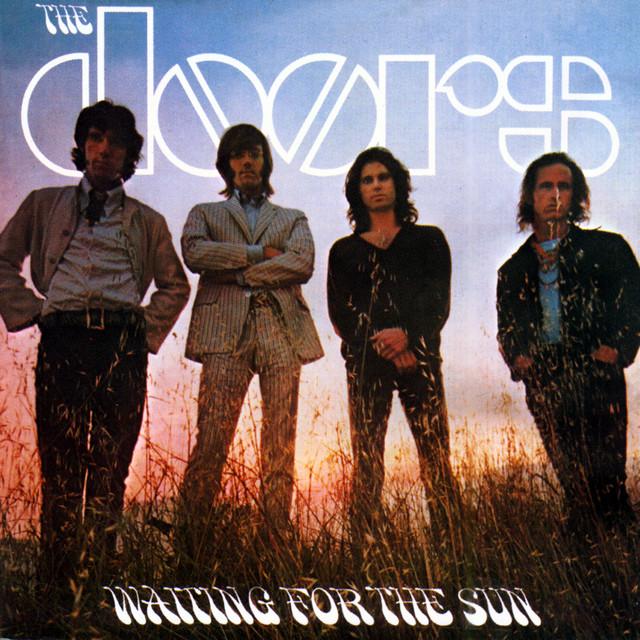
Waiting for the Sun is the third studio album by The Doors, released in 1968. It became the band's first—and only—album to reach No. 1 on the Billboard 200 during their lifetime, cementing their status as one of the most influential rock bands of the 1960s. While it retained the band's signature blend of psychedelic rock, blues, jazz, and acid rock, the album also introduced a more accessible and melodic sound, helping it appeal to a broader audience without sacrificing the band's artistic identity.
The album features some of The Doors' most recognizable songs, including **"Hello, I Love You," "Love Street," "Five to One,"** and **"The Unknown Soldier."** "Hello, I Love You" became the band's second No. 1 single in the United States, while "Five to One" evolved into one of the group's most celebrated live performances thanks to its hypnotic rhythm and Jim Morrison's commanding vocal delivery.
Featured Album Video

The Doors - Waiting for the Sun
Read the full album story
Lyrically, the album explores themes of love, war, freedom, social unrest, and existentialism. Songs such as "The Unknown Soldier" reflect the political climate of the late 1960s, particularly the Vietnam War, while tracks like "Love Street" reveal a more intimate and personal side of Jim Morrison's songwriting. Musically, the band experimented with richer arrangements and a wider variety of styles, demonstrating their willingness to evolve beyond the darker atmosphere of their first two albums.
### Behind the Music
One of the most fascinating stories surrounding Waiting for the Sun is that **the title track isn't actually on the album.**
Jim Morrison had written a long, ambitious composition called **"Celebration of the Lizard,"** a theatrical suite that was originally intended to occupy the entire second side of the record. The band even planned to call the album after one of its sections, "Waiting for the Sun." However, after weeks of rehearsals and recording attempts, they realized the piece simply wasn't coming together in the studio. Producer Paul Rothchild eventually convinced the band to abandon it, believing it wasn't ready for release. As a result, the album kept the title **Waiting for the Sun**, but the actual song wouldn't appear until Morrison Hotel in 1970, while **Celebration of the Lizard** remained largely unreleased in its complete studio form. It's one of rock's most famous "missing albums."
Another memorable story involves **Jim Morrison's increasingly unpredictable behavior** during the recording sessions. By 1968, Morrison's heavy drinking had begun affecting the band's workflow. He frequently arrived late, missed recording sessions, or struggled to focus in the studio. Producer Paul Rothchild later admitted that keeping Morrison engaged had become one of the biggest challenges during the making of the album. Despite these difficulties, Morrison still delivered some of his strongest vocal performances, particularly on "Five to One" and "The Unknown Soldier."
Perhaps the album's most controversial song is **"The Unknown Soldier."** Inspired by television footage of the Vietnam War, Morrison wanted listeners to experience the horror of conflict rather than simply hear another protest song. During the recording, the band incorporated sound effects of marching soldiers, military commands, and even a firing squad execution. Morrison himself acted out the role of the condemned soldier in the studio, creating one of the most dramatic and politically charged recordings of the era.
The band's biggest hit from the album, **"Hello, I Love You,"** also generated controversy. Shortly after its release, members of **The Kinks** claimed that its main guitar riff and melody closely resembled their 1964 hit **"All Day and All of the Night."** Although no lawsuit was filed, guitarist Ray Davies publicly criticized the similarity for years, and the comparison remains one of the most discussed controversies surrounding the song.
The recording sessions also highlighted the growing musical maturity of keyboardist **Ray Manzarek**, guitarist **Robby Krieger**, and drummer **John Densmore**. Since Morrison's attendance became increasingly unreliable, the remaining members often spent hours refining arrangements before he arrived. This collaborative process gave the instrumental performances a level of sophistication that distinguished Waiting for the Sun from the band's earlier, more spontaneous recordings.
Although some critics initially considered Waiting for the Sun less adventurous than The Doors' first two albums, its reputation has grown considerably over time. Today, it is recognized as an important transitional record that balanced commercial success with artistic experimentation. It captures The Doors at a pivotal moment—still capable of producing hit singles while beginning to confront the creative and personal tensions that would shape the final years of the band.
More Psychedelia Albums
 The Brian Jonestown Massacre - My Bloody Underground
 All Them Witches - Nothing as the Ideal
 Prince - Purple Rain
 Pink Floyd - The Dark Side of the Moon
 Eric Burdon and War - Eric Burdon Declares "War"
 Echo & The Bunnymen - Heaven Up Here
 Kasabian - For Crying Out Loud (album)
 Beck - Modern Guilt
 Echo & The Bunnymen - Crocodiles (album)
 Television Personalities - The Painted Word
 UFO - UFO 2: Flying
 The Flaming Lips - At War with the Mystics

Join the Conversation
Share your thoughts about this music story.
No comments yet. Be the first to comment.