 By Admin
·
July 25, 2026
By Admin
·
July 25, 2026
"Trash" by Alice Cooper
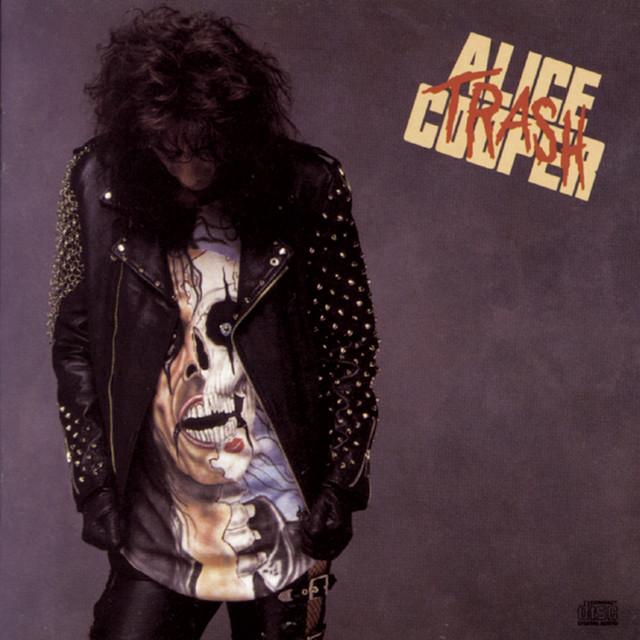
Trash is the eighteenth studio album by Alice Cooper, released on July 25, 1989. Produced by Desmond Child, the album became one of the great comeback records of Cooper's career, bringing him back to mainstream rock audiences with a polished hard-rock and glam-metal sound built for the late 1980s. ([Alice Cooper][1])
The centerpiece is "Poison," which became Cooper's first US Top 10 single since "You and Me" in 1977. But Trash is much more than its biggest hit. "Bed of Nails," "House of Fire," "Only My Heart Talkin'," "Spark in the Dark," and the title track combine huge choruses, heavy guitars, theatrical lyrics, and the dark humor that had always been central to Cooper's personality. The album reached No. 20 in the US and No. 2 in the UK, helping introduce Alice Cooper to an entirely new generation. ([Alice Cooper][1])
Featured Album Video

Alice Cooper - Trash (Alice Cooper album)
Read the full album story
### Behind the Music
The most interesting thing about Trash is that Alice Cooper didn't simply stumble into a comeback. After returning to active touring in the second half of the 1980s, he deliberately teamed with Desmond Child, one of the era's most successful songwriters and producers. Child had worked with artists including Bon Jovi, and his instinct for enormous hooks helped reshape Cooper's sound for contemporary rock radio without removing Cooper's sinister humor and theatrical personality. ([Apple Music - Web Player][2])
And Cooper surrounded himself with an extraordinary collection of guests. Steven Tyler sings on "Only My Heart Talkin'," while Joe Perry plays guitar on "House of Fire." Jon Bon Jovi contributes vocals to "Trash"; Aerosmith's Tom Hamilton and Joey Kramer also play on the title track; and Richie Sambora and Steve Lukather appear on "Hell Is Living Without You." It almost feels like a gathering of the late-'80s hard-rock establishment built around the man who had helped inspire much of it. ([alicecooperechive.com][3])
There's an especially nice irony to that. By 1989, theatrical hard rock and glam metal were everywhere, and many younger performers were using imagery and stage ideas that Alice Cooper had pioneered years earlier. Trash allowed Cooper to enter their musical world and show that the original shock-rock star could compete with the generation he had influenced.
"House of Fire" has another interesting connection: it was co-written by Joan Jett with Cooper and Desmond Child, while "Bed of Nails" involved hit songwriter Diane Warren. The album was therefore constructed very differently from a typical self-contained rock-band record—it brought together some of the strongest commercial rock songwriting talent available at the time. ([Apple Music - Web Player][2])
The strategy worked spectacularly with "Poison." Its combination of a dark, seductive lyric, an enormous chorus, and slick production became Cooper's biggest hit in years and one of the songs most closely associated with him today. Trash ultimately sold more than two million copies and firmly restored Cooper's commercial standing. ([Alice Cooper][1])
What makes Trash particularly interesting in Alice Cooper's story is therefore not simply that it was successful. It was a reinvention. A performer who had helped define theatrical rock in the 1970s adapted himself to the musical language of 1989, collaborated with artists from the generation that followed him, and emerged with another international hit nearly two decades after his original breakthrough.
Trash may sound unmistakably like the late 1980s, but that's part of its identity. It captures Alice Cooper proving that he could change with the times without giving up the menace, humor, sexuality, and theatrical excess that made him Alice Cooper in the first place.
More Glam Metal Albums
 Aerosmith - Get a Grip
 Kiss - Asylum
 Def Leppard - Hysteria
 Skid Row - The Gang's All Here
 Def Leppard - Best of Def Leppard
 Toto - Isolation (Toto album)
 Great White - Shot in the Dark
 Mötley Crüe - Shout at the Devil
 Bon Jovi - Slippery When Wet
 Scorpions - Savage Amusement
 Ozzy Osbourne - Ordinary Man (Ozzy Osbourne album)
 Whitesnake - Slip of the Tongue

Join the Conversation
Share your thoughts about this music story.
No comments yet. Be the first to comment.