 By Admin
·
July 12, 2026
By Admin
·
July 12, 2026
"The Party's Over" by Talk Talk
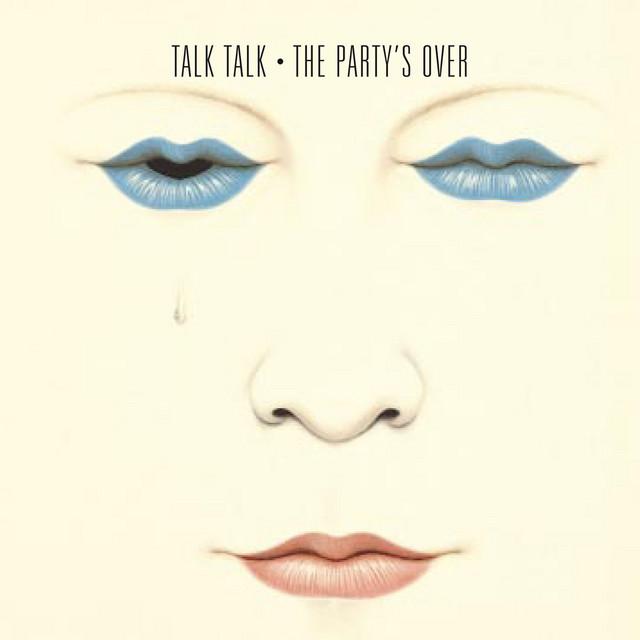
The Party's Over is the debut studio album by Talk Talk, released in 1982. Although it is often overshadowed by the band's later masterpieces such as Spirit of Eden and Laughing Stock, the album introduced a group that would eventually become one of the most innovative acts in modern music. At the time, however, Talk Talk were firmly rooted in the emerging new wave and synth-pop movement, delivering a collection of melodic, emotionally charged songs that balanced catchy hooks with a surprising sense of sophistication.
Musically, The Party's Over combines synth-pop, new wave, post-punk, and art pop. Built around shimmering synthesizers, atmospheric keyboards, melodic bass lines, and Mark Hollis' distinctive voice, the album established many of the characteristics that would remain part of Talk Talk's identity—even as their music became increasingly experimental in later years. Tracks such as "Talk Talk," "Today," "Mirror Man," and the title track demonstrated the band's ability to craft memorable pop songs while hinting at the emotional depth that would define their future work.
Featured Album Video

Talk Talk - The Party's Over (Talk Talk album)
Read the full album story
Lyrically, the album explores themes of alienation, relationships, identity, and emotional uncertainty. Even in these early recordings, Mark Hollis avoided straightforward pop clichés, preferring poetic and ambiguous lyrics that invited listeners to find their own meaning.
### Behind the Music
One of the most interesting stories surrounding The Party's Over is that **Talk Talk never wanted to be the next Duran Duran**—even though many people assumed they were.
When the band signed with EMI, the record label saw enormous commercial potential in the growing new romantic and synth-pop scene. Their stylish image, synthesizer-driven sound, and the timing of their debut led many journalists to compare them with Duran Duran. Mark Hollis disliked those comparisons almost immediately. He believed Talk Talk had very different musical ambitions and later admitted he was uncomfortable with being marketed as just another fashionable pop band.
Ironically, those early comparisons helped sell records, but they also created expectations the band would spend the rest of their career trying to escape.
Another fascinating story is that **Mark Hollis was already resisting commercial formulas during the band's very first album**. While producer Colin Thurston—best known for his work with Duran Duran and David Bowie—helped shape a polished, radio-friendly sound, Hollis was already pushing for greater subtlety and emotional depth. Friends and collaborators later recalled that he was far more interested in atmosphere than chart success, a philosophy that would eventually lead Talk Talk toward the groundbreaking sound of Spirit of Eden and Laughing Stock.
The album also contains one of Talk Talk's biggest early hits, **"Talk Talk."** Interestingly, Hollis would later become frustrated that many people knew the band only for its synth-pop singles. As the years passed, he deliberately moved away from catchy hooks and embraced quieter, more experimental music—even though he knew it would cost the band commercial success. It was a rare example of an artist intentionally walking away from fame in pursuit of artistic freedom.
The recording sessions revealed another side of Hollis' perfectionism. Even on this relatively straightforward pop album, he paid extraordinary attention to details such as vocal phrasing, silence between notes, and the emotional impact of each performance. Those qualities became increasingly important on every subsequent Talk Talk record, eventually redefining the band's entire creative process.
Looking back, The Party's Over feels less like the destination and more like the beginning of one of rock music's most remarkable artistic journeys. Few bands have evolved as dramatically as Talk Talk—from synth-pop newcomers to pioneers of post-rock and atmospheric experimental music. Listening to the album today, it's possible to hear the first signs of that transformation already taking shape beneath the polished production.
Although The Party's Over remains the most commercially accessible album in Talk Talk's catalog, its reputation has grown over the years. It stands as the starting point of a career defined by constant reinvention, proving that even behind catchy synth-pop songs, Mark Hollis was already searching for something far deeper than pop success.
More Synth-Pop Albums
 Pink Turns Blue - Perfect Sex
 Eurythmics - Peace
 Neil Young - Trans
 Nitzer Ebb - Basic Pain Procedure
 The Residents - Residue of the Residents
 The Stranglers - Rattus Norvegicus (album)
 Alice Cooper - Special Forces (Alice Cooper album)
 Eurythmics - Ultimate Collection
 Yazoo - Upstairs at Eric's
 The Chemical Brothers - Born in the Echoes
 A Flock Of Seagulls - Listen
 Prince - Batman (album)

Join the Conversation
Share your thoughts about this music story.
No comments yet. Be the first to comment.