 By Admin
·
December 01, 2023
By Admin
·
December 01, 2023
"The Book of Taliesyn" by Deep Purple
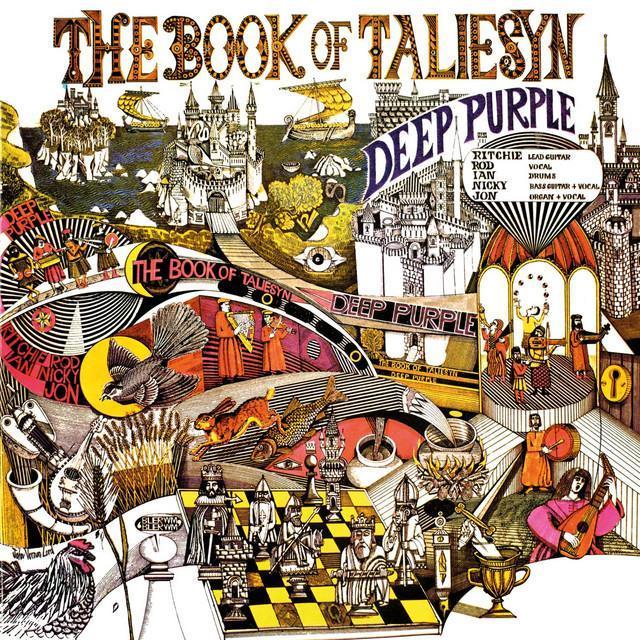
The Book of Taliesyn is the second studio album by Deep Purple, released in 1968 during the band’s early “Mark I” era. Recorded only a few months after their debut album, the record showed a significant evolution in both songwriting and musical ambition, helping establish many of the progressive and hard rock elements that would later become central to Deep Purple’s identity.
Musically, the album blends psychedelic rock, progressive rock, hard rock, and classical influences into a sound that feels darker, more complex, and more experimental than the band’s debut. The songs are generally longer and feature more sophisticated arrangements, with keyboardist Jon Lord playing a major role in shaping the album’s symphonic and classical atmosphere. His interest in combining classical music with rock would later become one of Deep Purple’s defining characteristics.
Featured Album Video

Deep Purple - The Book of Taliesyn
Read the full album story
The album contains a mixture of original compositions and reimagined cover versions, a format similar to the band’s debut. However, the arrangements here are more adventurous and ambitious. Tracks such as “Listen, Learn, Read On,” “Anthem,” and “Wring That Neck” demonstrate the band’s growing confidence as composers and performers, while covers like “Kentucky Woman” and “River Deep – Mountain High” were transformed into extended psychedelic and hard rock interpretations.
One of the album’s most distinctive qualities is its atmosphere. Inspired partly by the medieval Welsh manuscript Book of Taliesin, the record carries a mystical and almost fantasy-like mood, reinforced by its cover artwork and lyrical themes. The music often shifts between melodic passages, dramatic orchestral textures, heavy guitar work, and experimental sections, creating a sound that feels both ambitious and exploratory.
The performances throughout the album highlight the talents of the original Deep Purple lineup. Guitarist Ritchie Blackmore contributes powerful blues-influenced and psychedelic guitar work, while Jon Lord’s Hammond organ frequently drives the arrangements. Together, they helped create the musical tension between classical sophistication and hard rock energy that would later become one of the band’s trademarks.
Although The Book of Taliesyn was initially overshadowed by later Deep Purple classics such as In Rock and Machine Head, its reputation has grown considerably over time. Many critics and fans now view it as an important transitional album that captured the band before they fully developed their signature hard rock sound. It remains a fascinating snapshot of a period when psychedelic rock, progressive experimentation, and heavy rock were beginning to merge into something entirely new.
More Psychedelic Rock Albums
 Paul McCartney - Run Devil Run
 Gang of Four - What Happens Next
 The War on Drugs - I Don't Live Here Anymore
 Simply Red - Songs of Love
 The Doors - Strange Days
 Traffic - Far from Home
 Adam Ant - Wonderful
 Foals - Everything Not Saved Will Be Lost – Part 1
 Kiss - Animalize
 Bruce Springsteen - Wrecking Ball
 Squeeze - Play
 Saliva - Blood Stained Love Story

Join the Conversation
Share your thoughts about this music story.
No comments yet. Be the first to comment.