 By Admin
·
July 07, 2026
By Admin
·
July 07, 2026
"I Inside the Old Year Dying" by PJ Harvey
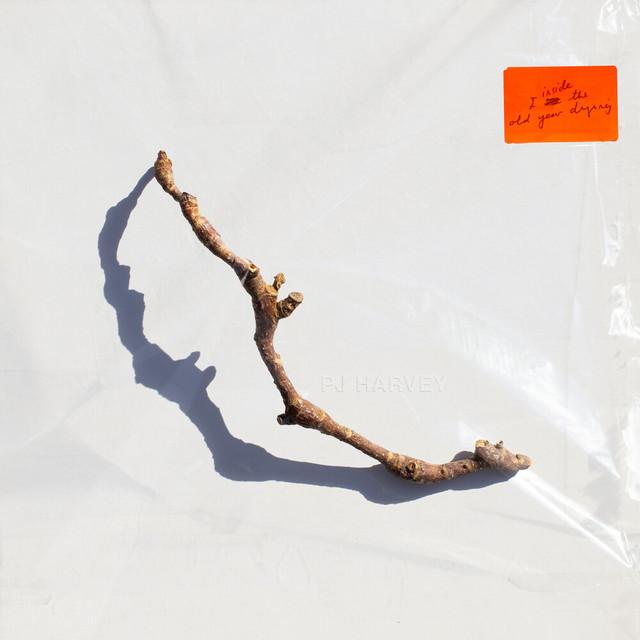
I Inside the Old Year Dying is the tenth studio album by PJ Harvey, released in 2023. One of the most atmospheric and enigmatic records of her career, the album draws inspiration from Harvey's 2022 epic poem *Orlam*, transforming its fictional rural landscape into a haunting musical experience. Blending folk, art rock, experimental music, and ambient textures, the album explores themes of transformation, innocence, nature, grief, and the fragile boundary between childhood and adulthood.
Unlike many of PJ Harvey's previous records, which often confronted political or social issues directly, I Inside the Old Year Dying is deeply rooted in mythology, folklore, and personal imagination. Much of the album is sung from the perspective of young characters living in a dreamlike version of the English countryside, with lyrics written in a Dorset dialect that gives the songs an ancient and mysterious quality. The result is an album that rewards repeated listening, gradually revealing its emotional depth beneath its poetic language.
Featured Album Video

PJ Harvey - I Inside the Old Year Dying
Read the full album story
Musically, the record is sparse and immersive. Delicate acoustic guitars, subtle percussion, atmospheric electronics, and organic soundscapes create an almost cinematic atmosphere. Harvey's vocals shift between whisper-like intimacy and haunting melodies, emphasizing emotion over dramatic performance. Songs such as **"A Child's Question, August," "I Inside the Old Year Dying,"** and **"Prayer at the Gate"** showcase her ability to create powerful emotional landscapes with remarkably restrained arrangements.
### Behind the Music
One of the most fascinating aspects of the album is that **it was born from a book rather than from music**.
After publishing her narrative poem *Orlam* in 2022, Harvey realized that many of its characters and emotions still had stories left to tell. Instead of adapting the book directly, she returned to its world and allowed new songs to emerge naturally from the same fictional setting. She described the album as **"a resting place for the voice of the child at the center of Orlam,"** making it less of a soundtrack and more of a companion piece to the book.
Another interesting detail is that Harvey deliberately challenged herself by **singing in the Dorset dialect** used throughout *Orlam*. Although she grew up in Dorset, she had never performed an entire body of work using that regional language. She later admitted that finding melodies that respected both the dialect and the emotional tone of the lyrics was one of the album's greatest creative challenges.
The recording process was also unusually patient. Harvey reunited with longtime collaborators **John Parish** and **Flood**, two producers who have worked with her on many of her most acclaimed albums. Rather than building songs quickly, the trio spent long periods experimenting with mood, silence, and texture. Many recordings were intentionally left sparse because Harvey believed that **what wasn't played could be just as emotionally powerful as what was**.
One of the album's most striking qualities is its use of nature as an instrument. Throughout the record, birdsong, wind-like textures, echoes, and environmental sounds blend seamlessly with the music, making it difficult at times to distinguish between the natural world and the instruments. Harvey has often spoken about wanting listeners to feel as though they had stepped into an ancient forest or a forgotten dream rather than simply listening to a collection of songs.
The album also marked a significant artistic shift after Harvey's politically charged works *The Hope Six Demolition Project* and *Let England Shake*. Instead of looking outward at global events, she turned inward, exploring imagination, folklore, and memory. Critics widely praised this change of direction, describing the album as one of her most intimate, poetic, and emotionally immersive works.
Upon its release, I Inside the Old Year Dying received widespread critical acclaim for its originality, atmosphere, and literary ambition. Many reviewers highlighted Harvey's ability to transform poetry into music without sacrificing either form, creating an album that feels timeless, mysterious, and unlike anything else in contemporary alternative music.
Today, the album is regarded as one of the most unique entries in PJ Harvey's remarkable catalog—a deeply immersive work that rewards patience and careful listening while demonstrating her continued willingness to reinvent herself more than three decades into her career.
More Post-Punk Albums
 Thin Lizzy - Thin Lizzy (album)
 Hazel O'Connor - Sons and Lovers
 Pere Ubu - Datapanik in the Year Zero
 The Smiths - Hatful of Hollow
 Joy Division - The Best of Joy Division
 The National - Sad Songs for Dirty Lovers
 Fontaines D.C. - Skinty Fia
 White Lies - To Lose My Life...
 Current 93 - Black Ships Heat the Dancefloor
 Roy Harper - Lifemask
 Nick Cave - Let Love In (Nick Cave and the Bad Seeds album)
 Jethro Tull - Stormwatch

Join the Conversation
Share your thoughts about this music story.
No comments yet. Be the first to comment.