 By Admin
·
July 14, 2026
By Admin
·
July 14, 2026
"Hello Nasty" by Beastie Boys
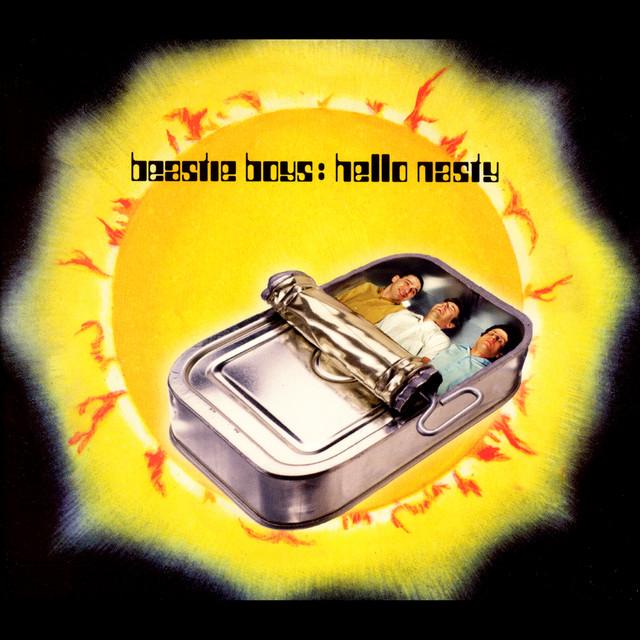
Hello Nasty is the fifth studio album by the Beastie Boys, released in 1998. Arriving four years after Ill Communication, the album marked another dramatic evolution for the trio, proving once again that they refused to be confined to a single musical style. Blending hip-hop, electronic music, punk, funk, jazz, dub, and psychedelia, Hello Nasty became one of the band's most adventurous and commercially successful albums, debuting at No. 1 in several countries and earning two Grammy Awards.
Musically, the album is a whirlwind of ideas. The Beastie Boys seamlessly move between old-school hip-hop, futuristic electronic production, live instrumentation, and experimental sound collages. Tracks such as "Intergalactic," "Body Movin'," "Three MC's and One DJ," and "Remote Control" showcase the group's trademark humor, inventive sampling, and willingness to push hip-hop into unexpected territory.
Featured Album Video

Beastie Boys - Hello Nasty
Read the full album story
Lyrically, Hello Nasty balances playful absurdity with more thoughtful observations about creativity, individuality, and modern life. While the Beastie Boys never lost their sense of humor, the album reflects a band that had matured significantly since their early party-rap days, embracing experimentation without sacrificing their infectious energy.
Behind the Music
One of the biggest reasons Hello Nasty sounds so different from earlier Beastie Boys albums is the arrival of producer Mix Master Mike.
After joining the group following Ill Communication, the legendary turntablist became much more than a DJ—he became an integral creative force. His extraordinary scratching techniques, unconventional sampling, and experimental ideas pushed the Beastie Boys into new sonic territory. The band later credited him with inspiring many of the album's most adventurous moments, making Hello Nasty feel like the beginning of a new chapter rather than simply another Beastie Boys record.
Another fascinating story is that much of the album grew out of free-form studio experimentation rather than carefully planned songwriting. Instead of entering the studio with finished tracks, the band spent months jamming, recording strange sounds, experimenting with vintage keyboards, loops, drum machines, and samples. Many songs were assembled from dozens of separate sessions, allowing unexpected ideas to become some of the album's defining moments.
The album's biggest hit, "Intergalactic," almost didn't happen.
The Beastie Boys struggled for months to find the right balance between old-school rap and futuristic production. The breakthrough came when Mix Master Mike introduced a series of aggressive turntable scratches that transformed the track into one of the band's most recognizable songs. Today, "Intergalactic" remains one of the defining hip-hop tracks of the late 1990s and won the Grammy Award for Best Rap Performance by a Duo or Group.
One of the most memorable moments surrounding the album wasn't in the studio—it was the music video for "Intergalactic." Directed by longtime collaborator Nathaniel Hörnblowér (the alter ego of Adam Yauch), the video featured a giant robot battling a massive octopus through the streets of Tokyo. Inspired by classic Japanese kaiju films such as Godzilla, the video became an MTV favorite and won the MTV Video Music Award for Best Special Effects. It remains one of the most iconic music videos of the 1990s.
Another interesting detail is that Hello Nasty was the first Beastie Boys album to be recorded almost entirely in their own studio in Los Angeles. Having complete creative freedom allowed the group to work without deadlines or outside pressure, encouraging the playful experimentation that defines the record.
Upon its release, Hello Nasty received widespread critical acclaim for its originality and fearless creativity. It debuted at No. 1 on the Billboard 200, sold millions of copies worldwide, and is now considered one of the Beastie Boys' greatest achievements. More than twenty-five years later, the album continues to influence artists across hip-hop, electronic music, and alternative rock, standing as a reminder that some of the most exciting records are created by artists who refuse to repeat themselves.
More Alternative Hip Hop Albums
 Busta Rhymes - A Future Without a Past...
 Cypress Hill - Elephants on Acid
 Fugees - The Score
 Outkast - ATLiens
 De La Soul - De La Soul Is Dead
 Beastie Boys - Beastie Boys Anthology: The Sounds of Science
 Beck - Guero
 Beastie Boys - Root Down (EP)
 Tom Waits - Real Gone
 Cypress Hill - Black Sunday (Cypress Hill album)
 Beck - Odelay
 The Black Keys - Blakroc

Join the Conversation
Share your thoughts about this music story.
No comments yet. Be the first to comment.