 By Admin
·
July 03, 2026
By Admin
·
July 03, 2026
"Black Holes and Revelations" by Muse
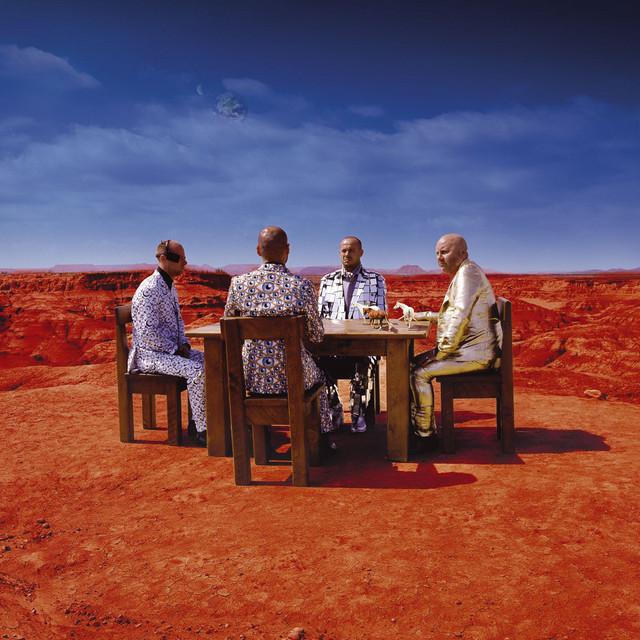
Black Holes and Revelations is the fourth studio album by Muse, released in 2006. Widely regarded as one of the band's defining works, the album marked the moment when Muse evolved from a successful alternative rock band into a global arena-rock phenomenon. Combining alternative rock, progressive rock, electronic music, hard rock, and space rock, the album pushed the band's sound into bold new territory while producing some of their biggest and most enduring songs.
The album features several of Muse's signature tracks, including **"Supermassive Black Hole," "Starlight," "Map of the Problematique,"** and the epic **"Knights of Cydonia."** While previous albums leaned heavily on progressive rock and classical influences, Black Holes and Revelations introduced funk, electronic dance music, flamenco, and even western film influences without losing the band's dramatic identity. Lyrically, Matt Bellamy explored themes of political corruption, revolution, conspiracy theories, war, technology, and humanity's place in the universe, giving the album its distinctive futuristic atmosphere.
Featured Album Video

Muse - Black Holes and Revelations
Read the full album story
The production is one of the album's greatest strengths. Producer Rich Costey encouraged the band to experiment with new recording techniques while preserving the energy of their performances. The result is a polished yet adventurous album that balances massive arena anthems with intricate musical detail. It went on to become one of Muse's most successful releases, selling more than 4.5 million copies worldwide and establishing the band as one of the biggest rock acts of the 21st century.
### Behind the Music
One of the most fascinating stories behind the album is that **Matt Bellamy became obsessed with New York's nightlife while recording there**. After the band relocated from a château in southern France to New York City, Bellamy started visiting clubs and even learned to DJ. Those late-night experiences completely changed the direction of several songs, most notably **"Supermassive Black Hole."** Instead of writing another heavy progressive rock anthem, Muse embraced dance grooves, funk rhythms, and electronic beats—something almost unthinkable for the band only a few years earlier. The gamble paid off, as the song became one of Muse's biggest international hits.
The recording sessions were also unusually relaxed compared to previous albums. Bassist Chris Wolstenholme later explained that, for the first time, the band wasn't working under a strict deadline. That freedom allowed them to spend weeks experimenting with vintage synthesizers, including a rare Buchla 200e, and to learn the equipment themselves instead of relying entirely on studio engineers. It was the first Muse album where the band became deeply involved in the technical side of recording, a change that permanently influenced how they made music afterward.
Another interesting story involves **"Map of the Problematique."** The song's famous guitar sound wasn't actually written as a guitar riff. Matt Bellamy originally composed it on a keyboard. Producer Rich Costey challenged him to recreate it on guitar, leading to an unusual recording technique where the guitar signal was split into multiple outputs and processed through pitch shifters and synthesizers. The result became one of the most distinctive guitar sounds in Muse's catalog.
Perhaps the most surprising recording decision came during **"Soldier's Poem."** The band originally planned to produce it as another huge, dramatic Muse anthem. Instead, they scrapped that idea at the last minute and recorded it in a tiny studio using vintage equipment and only a handful of microphones. Drummer Dominic Howard later called it one of the highlights of the entire album, saying it captured what he considered one of Matt Bellamy's finest vocal performances.
The album's closing masterpiece, **"Knights of Cydonia,"** almost became too over-the-top—even by Muse's standards. It combines surf rock, western film music, flamenco influences, mariachi trumpets, and progressive rock into a six-minute epic. Bellamy later admitted the title was chosen partly because the band realized they were pushing their theatrical style to almost absurd levels, and they decided to embrace that excess with a sense of humor rather than shy away from it. The song would go on to become one of the most celebrated concert closers in modern rock.
Today, Black Holes and Revelations is considered one of Muse's greatest achievements and one of the defining rock albums of the 2000s. Its willingness to blend electronic music, progressive rock, funk, and cinematic storytelling proved that a modern rock band could remain commercially successful while taking major creative risks. Nearly two decades later, songs like **"Starlight," "Supermassive Black Hole,"** and **"Knights of Cydonia"** remain staples of Muse's live performances and continue to inspire a new generation of alternative and progressive rock musicians.
More Alternative Rock Albums
 Flea - Helen Burns
 Manfred Mann's Earth Band with Chris Thompson - Criminal Tango
 Budgie - Deliver Us from Evil
 Genesis - Trespass
 Men At Work - Cargo (album)
 Tears for Fears - The Hurting
 Boz Scaggs - Moments
 Pere Ubu - Why I Hate Women
 Tame Impala - Innerspeaker
 David Bowie - Tonight
 A-Ha - Cast in Steel
 Cyndi Lauper - The Body Acoustic

Join the Conversation
Share your thoughts about this music story.
No comments yet. Be the first to comment.