 By Admin
·
July 14, 2026
By Admin
·
July 14, 2026
"Bee Gees' 1st" by Bee Gees
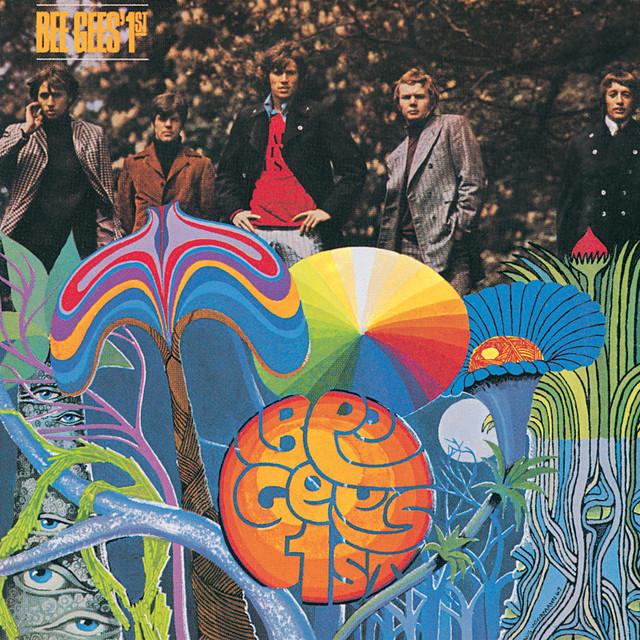
Bee Gees' 1st is the third studio album by the Bee Gees and their first international release, issued on 14 July 1967. Although Barry, Robin, and Maurice Gibb had already recorded two albums in Australia, this was their debut for audiences in the UK, the US, and the rest of the world. It marked the beginning of the Bee Gees' international career and introduced a songwriting partnership that would become one of the most successful in popular music history.
Musically, the album blends psychedelic rock, psychedelic pop, baroque pop, and orchestral arrangements, reflecting the creative explosion taking place in British music during the late 1960s. While comparisons to The Beatles were inevitable, the Bee Gees quickly established their own identity through rich vocal harmonies, sophisticated melodies, and emotionally driven songwriting. Songs such as "New York Mining Disaster 1941," "To Love Somebody," "Holiday," and "Every Christian Lion Hearted Man Will Show You" showcased a remarkable level of maturity for a band still in the early stages of its career.
Featured Album Video

Bee Gees - Bee Gees' 1st
Read the full album story
Lyrically, the album explores love, loneliness, hope, tragedy, and human resilience. Even at this early stage, the Bee Gees demonstrated a talent for writing songs that were both deeply emotional and melodically unforgettable, qualities that would remain central to their music for decades.
Behind the Music
One of the most fascinating stories behind Bee Gees' 1st is that its breakthrough single, "New York Mining Disaster 1941," sparked widespread speculation before listeners even knew who had recorded it.
When the song arrived at radio stations, its haunting sound and vocal harmonies reminded many DJs of The Beatles during their Revolver period. Combined with the mysterious promotional campaign surrounding the release, rumors quickly spread that it might secretly be a new Beatles recording. The Bee Gees never claimed to be The Beatles, but the comparisons generated enormous curiosity and helped introduce the band to international audiences.
Another remarkable story surrounds "To Love Somebody." Producer Robert Stigwood asked Barry and Robin Gibb to write a soulful ballad specifically for Otis Redding. The brothers delivered what would become one of their finest songs, but before Redding had the opportunity to record it, he was killed in a plane crash in December 1967. The Bee Gees recorded the song themselves, and it became one of their signature early hits. Over the years it has been covered by hundreds of artists, including Nina Simone, Janis Joplin, Michael Bolton, and Billy Corgan, becoming one of the most celebrated compositions in the Bee Gees' catalog.
The recording sessions reflected the band's highly spontaneous creative process. Barry Gibb later explained that they rarely entered the studio with completed songs. Instead, the brothers would discuss an idea, write the music on the spot, and begin recording almost immediately. According to Barry, this spontaneous approach drove producer Robert Stigwood and the studio engineers "mad," but it was the only way the Bee Gees felt comfortable creating music.
The album also introduced two musicians who would become important members of the band's classic lineup. Drummer Colin Petersen and guitarist Vince Melouney joined the recording sessions shortly after the Gibb brothers returned to England, transforming the Bee Gees from a vocal trio into a fully developed rock band. Their contributions gave the album a richer and more dynamic sound that distinguished it from the brothers' earlier Australian recordings.
Visually, Bee Gees' 1st also carried impressive credentials. Its cover artwork was designed by Klaus Voormann, the celebrated German artist who had won a Grammy for creating the iconic cover of The Beatles' Revolver. His surreal illustration perfectly matched the album's psychedelic atmosphere and further reinforced the Bee Gees' place within the vibrant musical scene of 1967.
Although the Bee Gees would later become synonymous with disco and the soundtrack to Saturday Night Fever, Bee Gees' 1st reveals a very different side of the band. Long before "Stayin' Alive" and "Night Fever," they were crafting sophisticated psychedelic pop filled with orchestral arrangements, ambitious songwriting, and emotional storytelling. Today, the album stands as one of the finest debuts of the psychedelic era and the true beginning of the Bee Gees' extraordinary international career.
More Psychedelic Pop Albums
 Weezer - Hurley
 The Pastels - Up for a Bit with The Pastels
 Status Quo - Don't Stop
 Eurythmics - Peace
 Carole King - One to One
 The Smiths - Complete
 Manic Street Preachers - Futurology (album)
 Electric Light Orchestra - Eldorado
 Bruce Springsteen - The River
 The Human League - Reproduction
 The Turtles - Turtle Soup
 Oliver Sim - Hideous Bastard

Join the Conversation
Share your thoughts about this music story.
nkuzqkOHKBVCuGvatifUkXxF