 By Admin
·
July 09, 2026
By Admin
·
July 09, 2026
"Back It Up" by Robin Trower
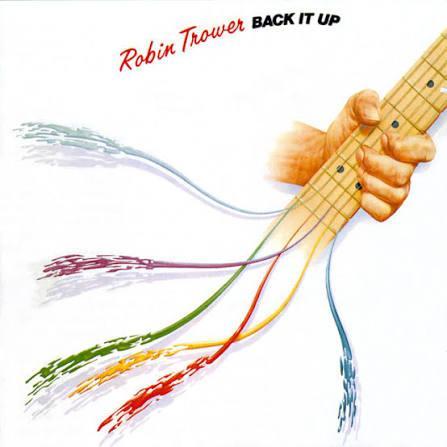
Back It Up is the twentieth studio album by Robin Trower, released in 1983. Arriving during a decade when many classic rock artists were embracing polished production and synthesizer-heavy sounds, the album found Trower adapting to the musical trends of the early 1980s while remaining rooted in the blues-rock guitar style that had defined his career. Although it is often overlooked compared to classics like Bridge of Sighs, Back It Up showcases Trower's ability to evolve without abandoning his unmistakable playing style.
Musically, the album blends blues rock, hard rock, and melodic AOR (Album-Oriented Rock), incorporating cleaner production, brighter guitar tones, and subtle keyboard textures that reflect the era. Despite these contemporary touches, Trower's expressive Stratocaster tone, soulful phrasing, and fluid solos remain the centerpiece of the record. Songs such as "Back It Up," "Islands," and "Black to Red" demonstrate his ability to combine memorable melodies with tasteful guitar work that favors emotion over technical excess.
Featured Album Video

Robin Trower - Back It Up (Robin Trower album)
Read the full album story
Lyrically, the album explores themes of perseverance, relationships, personal reflection, and moving forward. While the songwriting is more direct and radio-friendly than some of Trower's earlier work, the emotional sincerity remains intact, supported by strong vocal performances and polished arrangements.
Behind the Music
One of the most interesting stories surrounding Back It Up is that Robin Trower was facing enormous pressure to remain commercially relevant during the early 1980s. The music industry was rapidly changing, with MTV, synthesizers, and polished pop-rock dominating the charts. Rather than trying to compete with the emerging new wave movement, Trower chose a middle ground—modernizing his production while keeping the blues at the heart of his music. It was a difficult balancing act, and the album reflects an artist determined to evolve without losing his identity.
Another significant change was the return of vocalist James Dewar. After experimenting with different singers on previous projects, Trower reunited with Dewar, whose soulful voice had become closely associated with the guitarist's classic 1970s recordings. Their chemistry gave the album a sense of familiarity for longtime fans, even as the production embraced a more contemporary sound.
The recording sessions also revealed Trower's perfectionism as a guitarist. Unlike many blues-rock players who favored spontaneous first takes, Trower often spent hours refining guitar tones and phrasing until every note conveyed exactly the emotion he wanted. He has frequently said that finding the right feel was more important than playing fast or technically complex solos—a philosophy clearly heard throughout the album.
Interestingly, Back It Up has gained greater appreciation over the years than it received upon its original release. Many fans initially compared it to Trower's legendary 1970s albums and overlooked its strengths. More recently, listeners have re-evaluated it as a solid example of how an established blues-rock artist successfully navigated the changing musical landscape of the 1980s without completely reinventing himself.
Although it wasn't a major commercial breakthrough, Back It Up remains an important chapter in Robin Trower's career. It captures a gifted guitarist adapting to a new era while staying true to the expressive blues-based playing that made him one of rock's most respected musicians. Today, the album stands as an underrated release that highlights Trower's consistency, musicianship, and unwavering commitment to letting his guitar tell the story.
More Rock Albums
 Porcupine Tree - Closure/Continuation
 The Chameleons - Why Call It Anything
 The Waterboys - An Appointment with Mr Yeats
 King Crimson - Earthbound
 Deep Purple - Now What?!
 Creedence Clearwater Revival - Willy and the Poor Boys
 The B-52's - Good Stuff
 Blue Cheer - Oh! Pleasant Hope
 Red House Painters - Retrospective (Red House Painters album)
 Babyshambles - Shotter's Nation
 Styx - Styx II
 Taylor Swift - Speak Now (Taylor's Version)

Join the Conversation
Share your thoughts about this music story.
No comments yet. Be the first to comment.