Joy Division
Overview
Joy Division was a seminal English rock band that became one of the pioneering groups of the post-punk movement. Originating from Salford, England, the band was formed in 1976. It consisted of vocalist Ian Curtis, guitarist and keyboardist Bernard Sumner, bassist Peter Hook, and drummer Stephen Morris. Despite their brief career, the impact and legacy of Joy Division have continued to influence countless bands and musicians. Their music is characterized by a profoundly atmospheric and haunting sound, driven by somber and introspective lyrics that often explored themes of alienation, despair, and the human condition.
Initially, Joy Division was part of the punk rock explosion, but they quickly evolved their sound into something unique with a more layered and textured approach. The band's innovative use of synthesizers and their emphasis on mood and emotion set them apart from their contemporaries. Ian Curtis's deep baritone voice and evocative lyrics, coupled with the band's distinctive instrumentation, resulted in a transformative listening experience. Even though their time as a band was short-lived, Joy Division's influence continues to resonate in music today.
Formation and Early Years
Joy Division was born out of the punk rock scene, with its members initially inspired by a Sex Pistols concert they attended in 1976. Bernard Sumner and Peter Hook, who were lifelong friends and schoolmates, decided to form a band following the show. They recruited Stephen Morris, who attended the same school as Sumner, as their drummer. The trio was completed with the addition of Ian Curtis as lead vocalist. The band initially performed under the name Warsaw, but changed to Joy Division to avoid confusion with another band called Warsaw Pakt.
In their early years, Joy Division struggled to gain immediate recognition. They played numerous gigs around Manchester and recorded demos, trying to establish their presence in the competitive music scene. It wasn't until they caught the attention of Tony Wilson, the co-founder of Factory Records, that things began to change. Wilson offered to produce an album with them, which eventually led to their breakthrough. The band's raw and intense performances, coupled with Curtis's enigmatic stage presence, gradually began to build a fervent following.
Career Highlights
Joy Division's career, though tragically short, was marked by significant accomplishments that contributed to their lasting legacy. Their debut album, 'Unknown Pleasures,' was released in 1979 and received critical acclaim for its innovative sound and production. The album was produced by Martin Hannett, whose unconventional techniques helped to create the distinct and atmospheric quality that became synonymous with Joy Division's music.
The band followed up with their second album, 'Closer,' in 1980, which was released posthumously after the tragic suicide of Ian Curtis. 'Closer' was well received and further solidified Joy Division's status as pioneers of the post-punk movement. Songs like 'Isolation' and 'Decades' showcased their ability to blend moody, introspective lyrics with lush, textured instrumentation. Despite their brief existence, Joy Division's prolific output during their career left a profound impact on the music scene, influencing a plethora of artists and bands that followed in their wake.
Musical Style
Joy Division's musical style is characterized by its haunting and atmospheric quality, which set them apart from their punk rock beginnings. They are often credited with helping to define the post-punk genre, blending elements of punk with electronic and experimental sounds. The band's use of synthesizers and innovative production techniques gave their music a distinct, layered sound that was both somber and enigmatic.
Ian Curtis's lyrics are an integral part of Joy Division's style. His words often delved into themes of existential angst, uncertainty, and introspection, reflecting his personal struggles. Curtis's delivery, combined with the band's sparse, yet powerful instrumentation, created an emotive experience that resonated with audiences. The influence of early post-punk acts like David Bowie and Iggy Pop can be heard in their work, but Joy Division managed to carve out their own niche, setting a standard for subsequent bands to aspire to.
Most Important Albums
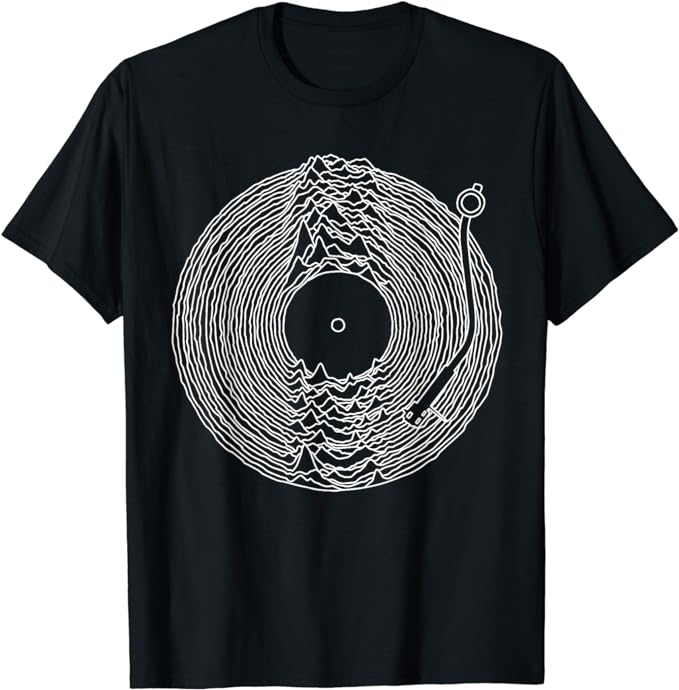
Joy Division's discography, though concise, contains two groundbreaking albums that have left a lasting legacy in the music world. 'Unknown Pleasures,' released in 1979, was their debut album and a landmark in the post-punk movement. Its cover, a simple yet iconic design by artist Peter Saville, has become synonymous with the band. Standout tracks such as 'Disorder,' 'She's Lost Control,' and 'New Dawn Fades' showcase the band's ability to create a moody and immersive sonic environment.
The band's second album, 'Closer,' released in 1980, is often considered a masterpiece. It was released shortly after Ian Curtis's death and is seen as a poignant testament to his talents as a lyricist and performer. With tracks like 'Atrocity Exhibition,' 'Isolation,' and 'Heart and Soul,' the album pushes the band's sound into more experimental territory, with dark and compelling results. 'Closer' remains a critical high point for Joy Division and is frequently cited in discussions of the greatest albums of all time.
Legacy and Influence
Joy Division's influence extends far beyond their brief time as a band. They are often cited as one of the most influential bands of the late 20th century, having left an indelible mark on the post-punk genre. Their music has inspired countless bands and artists across different genres, including U2, Radiohead, and Interpol, among others. The band's ability to blend raw emotional depth with innovative musical arrangements set a precedent that has been emulated by many.
Ian Curtis's tragic death and the subsequent end of Joy Division added a layer of mythos to the band's legacy. His deeply personal and introspective lyrics continue to resonate with listeners, offering a sense of connection and understanding of the human experience. Beyond their music, Joy Division's aesthetic and visual style, characterized by minimalist designs, also impacted how bands presented themselves and their work. The legacy of Joy Division is enduring, as their music continues to be discovered by new generations of fans, reaffirming their status as icons of the post-punk movement.
Albums by Joy Division

Total: From Joy Division to New Order
June 06, 2011
Post-punk

The Best of Joy Division
March 24, 2008
Post-punk, gothic rock, new wave

The Complete BBC Recordings (Joy Division album)
October 04, 2000
Post-punk

Permanent (Joy Division album)
May 08, 1995
Post-punk
🛍 Shop Music


Warsaw
December 18, 1994
Punk rock

Substance (Joy Division album)
July 11, 1988
Post-punk, punk rock, gothic rock

The Peel Sessions
November 08, 1986
Post-punk, gothic rock, new wave

Still
October 09, 1981
Post-punk

Closer (Joy Division album)
July 18, 1980
Post-punk, new wave, gothic rock

Unknown Pleasures
June 15, 1979
Post-punk, gothic rock
Musicians / Members connected to Joy Division



FAQ about Joy Division
What genre is Joy Division?
Joy Division is commonly associated with Post-punk.
Where is Joy Division from?
Joy Division is from Salford, England, United Kingdom.
How many albums by Joy Division are listed on musicOnOff?
musicOnOff currently lists 10 albums by Joy Division.
