Boney M.
Overview
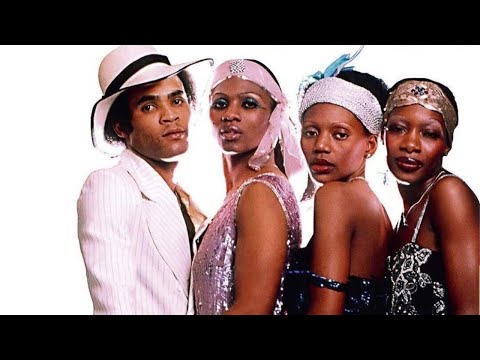
Boney M. is a European disco band that was originally created by German record producer Frank Farian in the mid-1970s. The band became synonymous with catchy disco tunes and extravagant performances. Boney M.'s unique sound was characterized by a mix of reggae, funk, and rhythm and blues, often accompanied by the powerful vocals of its performers. The group achieved massive success in the late 1970s and early 1980s, both in Europe and internationally. Their songs often featured themes of love, celebration, and social commentary, making them a distinctive staple in the music scene of the era. Notably, the image of the group and the productions were largely overseen by Farian, who also contributed vocals to some tracks. Despite undergoing several lineup changes and facing various challenges over the years, Boney M. remains a significant name in disco music history.
Formation and Early Years
The formation of Boney M. traces back to 1975, when Frank Farian sought to create a new musical act that could deliver his disco visions. Originally, Farian recorded the song 'Baby Do You Wanna Bump' under the name Boney M., initiating the group's journey. To bring the project to life on stage, Farian recruited singers and dancers who could encapsulate the vibrant energy he envisioned. The classic lineup consisted of four performers: Liz Mitchell, Marcia Barrett, Maizie Williams, and Bobby Farrell. Each member brought something unique to the group, with an eclectic background that enriched their performances. Boney M.'s debut album 'Take the Heat Off Me' was released in 1976, introducing audiences to their eclectic sound and leading to their breakout hit 'Daddy Cool'. The early years were marked by a series of performances across Europe and a growing fan base eager for their energetic shows and catchy beats.
Career Highlights
Boney M.'s career was marked by numerous hits and extensive international tours. One of the group's biggest hits, 'Rivers of Babylon', released in 1978, became a worldwide anthem, topping charts in multiple countries. It is one of the best-selling singles of all time in the UK. Following this, the band released 'Nightflight to Venus', an album that skyrocketed to success and included hits like 'Rasputin' and 'Sunny'. The group's flamboyant and colorful stage outfits, along with their vibrant performances, contributed to their international acclaim, particularly in Europe, Asia, and Africa. Despite internal changes, various lineup alterations, and challenges, Boney M. managed to maintain a presence in the music scene, continuing to perform and release music. Their ability to adapt to the dynamic music industry landscape was demonstrated throughout their career, releasing albums that resonated with audiences even as musical tastes evolved.
Musical Style
Boney M.'s music is a hallmark of the disco era, blending elements from diverse genres. Their sound draws upon disco's rhythmic intensity while incorporating flavors from reggae, R&B, and soul. This stylistic fusion allowed them to create catchy, dance-oriented tracks that appealed to a wide audience. The group's songs often featured strong, melodic hooks and infectious beats, which became signatures of their music. Lyrically, their songs were varied, touching on historical events, joyful celebrations, and social messages. Farian's production incorporated lush strings, upbeat brass sections, and layered vocal harmonies that gave Boney M. their distinctive auditory signature. Their music not only provided a soundtrack for parties but also engaged listeners with thought-provoking lyrics. Their ability to blend visual spectacle with musical prowess ensured Boney M.'s enduring popularity on international stages.
Most Important Albums
Boney M. released several albums that have remained iconic in the genre of disco and beyond. 'Take the Heat Off Me', their debut studio album released in 1976, laid the foundation for their successful journey with hits like 'Daddy Cool' and 'Sunny'. However, it was their 1978 album 'Nightflight to Venus' that catapulted them to international stardom. The album included chart-toppers such as 'Rivers of Babylon' and 'Rasputin', both of which were well-received globally. This album not only showcased their musical range but also solidified their position in the music industry. Following that, 'Love for Sale' and 'Oceans of Fantasy' further cemented their status as disco icons with a consistent blend of danceable tracks and melodic ballads. Their albums frequently demonstrated artistic courage and creativity, pushing the boundaries of the time and leaving a lasting impression on the music landscape.
Legacy and Influence
Boney M.'s influence on music is profound, particularly in the realms of disco and dance music. They helped popularize this genre across various continents, bringing disco music to mainstream audiences. The band's ability to merge eclectic musical elements set them apart and inspired generations of musicians and performers. Their colorful and energetic approach to music paved the way for future pop and disco bands, while their narrative-driven songs continue to influence songwriters today. Despite the decline of disco at the end of the 1970s, Boney M.'s work has endured, with their songs still played and celebrated at parties and events worldwide. They have been widely covered and sampled, further establishing their impact on the music industry. As an embodiment of the era's musical spirit, Boney M. remains a beloved and enduring act whose contributions have left an indelible mark on the musical history.
Albums by Boney M.

The Magic of Boney M.
October 27, 2006
Eurodance, pop, Euro disco

The Best of Boney M.
December 25, 1997
Eurodance, pop, Euro disco

Christmas with Boney M.
December 30, 1984
R&B, Christmas, Euro disco

Christmas Album
November 23, 1981
Disco, funk, reggae

Boonoonoonoos
November 20, 1981
Funk, reggae

The Magic of Boney M. – 20 Golden Hits
April 03, 1980
Eurodisco, reggae, R&B

Oceans of Fantasy
September 21, 1979
Eurodisco, reggae

Nightflight to Venus
June 23, 1978
Eurodisco, reggae, Funk

Love for Sale (Boney M. album)
May 02, 1977
Eurodisco, reggae, R&B

Take the Heat off Me
June 28, 1976
Eurodisco, reggae
Musicians / Members connected to Boney M.


FAQ about Boney M.
What genre is Boney M.?
Boney M. is commonly associated with Disco, Pop, Eurodisco.
Where is Boney M. from?
Boney M. is from West Germany.
How many albums by Boney M. are listed on musicOnOff?
musicOnOff currently lists 10 albums by Boney M..
